
There’s Room
at the Table
Our 2027 Room at the Table Commitment Campaign is an invitation to reflect on the kind of open, expansive community we are creating together—and what part you might play in making room for more.
Together, our commitments help make room for more people to find belonging, build friendships, do good, and follow Jesus.
Where have you experienced room at the table?
Maybe you found a place where you could bring your questions without needing all the answers.
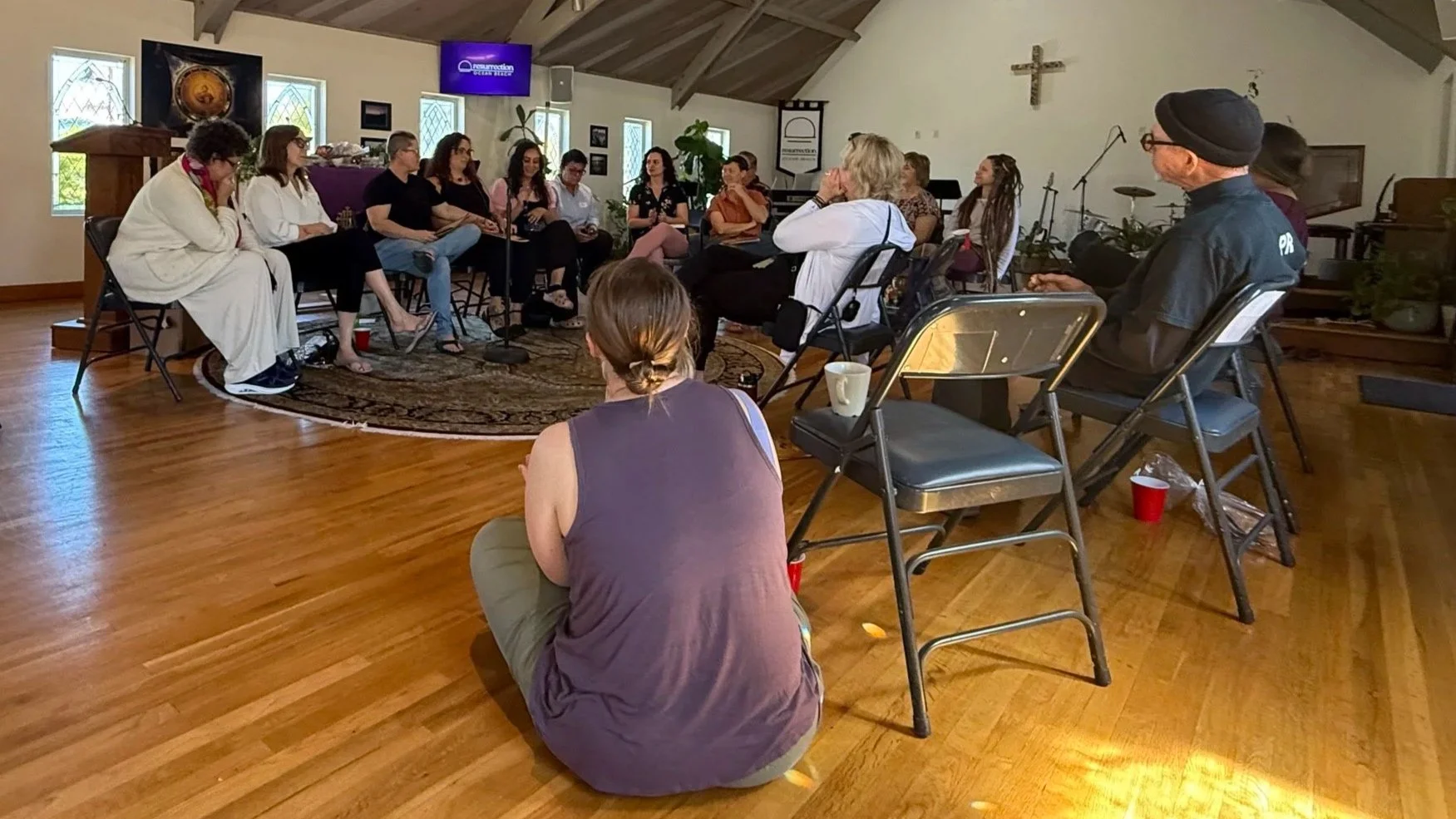
Maybe you discovered a community where your story, your family, your identity, or your experiences didn't have to fit neatly into a box.
Maybe someone simply remembered your name, listened to you, invited you in, or made room for you to belong.
Who might still be looking for that kind of table?
At Resurrection, we believe God's table is expansive—and there is always room for more.
What If We Made the Table Even Bigger?
Think about the people who haven't found their way here yet.
The neighbor longing for friendship and community.
The person who has been told there wasn't room for them.
The child or family
looking for a place to belong.
The person who hasn't stepped inside a church in twenty years.
The person with plenty to share—
and the person
who needs the community
to help carry them for a while.
There’s Room at the Table
Every year, Resurrection makes decisions about what happens at our shared table—how we support worship, serve our neighbors, care for our space, support staff, and create new opportunities for people to find belonging.
Your Generosity Makes Room
The challenge is simple: we can plan more responsibly when we have a clearer picture of the resources we’ll have together.
That’s why we’re asking people who call Resurrection home to tell us what they hope to give in 2027.
A Commitment.
Not a contract, a bill, or a debt.
It’s simply your best estimate, based on what you know today.
And if life changes, your commitment can change too.
Find an Amount That Brings Joy + Peace
There is no right number—and Resurrection is not entitled to a certain percentage of your income.
Instead, consider three things:
First:
Start with what you actually have.
Take an honest look at what comes in and what needs to go out. Your giving should not put necessities like housing, food, healthcare, debt payments, or caring for your family at risk.
If this isn’t a season when you can give financially, you are no less a part of Resurrection.
Second:
Consider what generosity looks like for you.
Generosity won't look the same for everyone.
For one person, $10 a month may represent meaningful generosity. For another, it might be $100, $500, or $1,000.
The goal isn't equal amounts.
It's each of us considering what we can contribute from what we have.
Third:
Look for joy + peace.
Ask yourself:
Does this amount feel generous enough that giving it brings me joy?
Is it sustainable enough that giving it leaves me with peace?
If it creates financial hardship, reconsider it. If you have more than enough, consider whether you have the opportunity to give more.
The goal is generosity with joy.
Room at the Table
As you consider your commitment, there's one final question:
What can I give with generosity and joy so that together we can keep making room at the table?
Your commitment helps Resurrection plan responsibly for 2027—and continue building a community where more people can find friendship, belonging, purpose, and a place at the table.
Frequently Asked Questions:
-
We're asking people who call Resurrection home to tell us what they hope to give financially in 2027. Knowing that ahead of time helps our Ministry Council create a responsible budget and plan for the year ahead.
Most importantly, it helps us keep making room at the table.
-
You may have heard churches use the word pledge. We're using commitment because we think it better describes what we're asking:
"Based on what I know today, this is what I hope to give next year."
It is not a contract, bill, or debt.
-
There isn't one right amount, and Resurrection does not expect everyone to give the same amount or automatically give 10%.
Consider what you have, what you need, and what you can give both generously and sustainably.
Those with fewer resources should not feel pressured to give what they cannot afford. Those with greater resources are invited to consider how their generosity can help make this community possible for others.
-
Take care of yourself and those who depend on you.
Your belonging at Resurrection is not determined by your financial contribution. You do not have to pay to belong here.
There may be seasons when some of us need the community's help rather than being able to financially support it. That's part of being a community.
-
Make your best estimate based on what you know today.
We know income can fluctuate, especially for people who are self-employed, work hourly, depend on tips or commissions, are retiring, changing jobs, or navigating other transitions.
Your best estimate is enough.
-
Change your commitment.
If your income decreases or unexpected expenses arise, you can reduce it. If your circumstances improve and you'd like to give more, you can increase it.
We aren't going to send you a bill or come looking for money you couldn't give.
-
No. You can give weekly, monthly, periodically, or through a single annual gift.
Recurring giving is especially helpful because it provides predictable income throughout the year, but it isn't required.
-
We hope you do.
Resurrection isn't the only good work happening in San Diego. Supporting nonprofits, neighbors, mutual aid, and causes you care about can all be part of a generous life.
Your commitment to Resurrection should take those other commitments into account.
-
Your financial information is treated confidentially. We may share our overall progress toward the congregational goal, but we will not publicly identify individual or household commitments.
-
You still have a place at the table.
Giving is one way we participate in the life of Resurrection. It isn't the price of admission.
We hope everyone who considers Resurrection their church will thoughtfully consider participating—but your belonging here is not for sale.
-
Because that's what we want our generosity to accomplish.
Room for the lifelong Episcopalian and the person who hasn't been inside a church in twenty years. Room for children and elders. Room for people with plenty and people struggling to get by.
Room for all of us to make friends, do good, and follow Jesus.
When we know what resources we can count on, we can plan responsibly—and keep making room.